

How the Names Are Arranged at the 9/11 Memorial
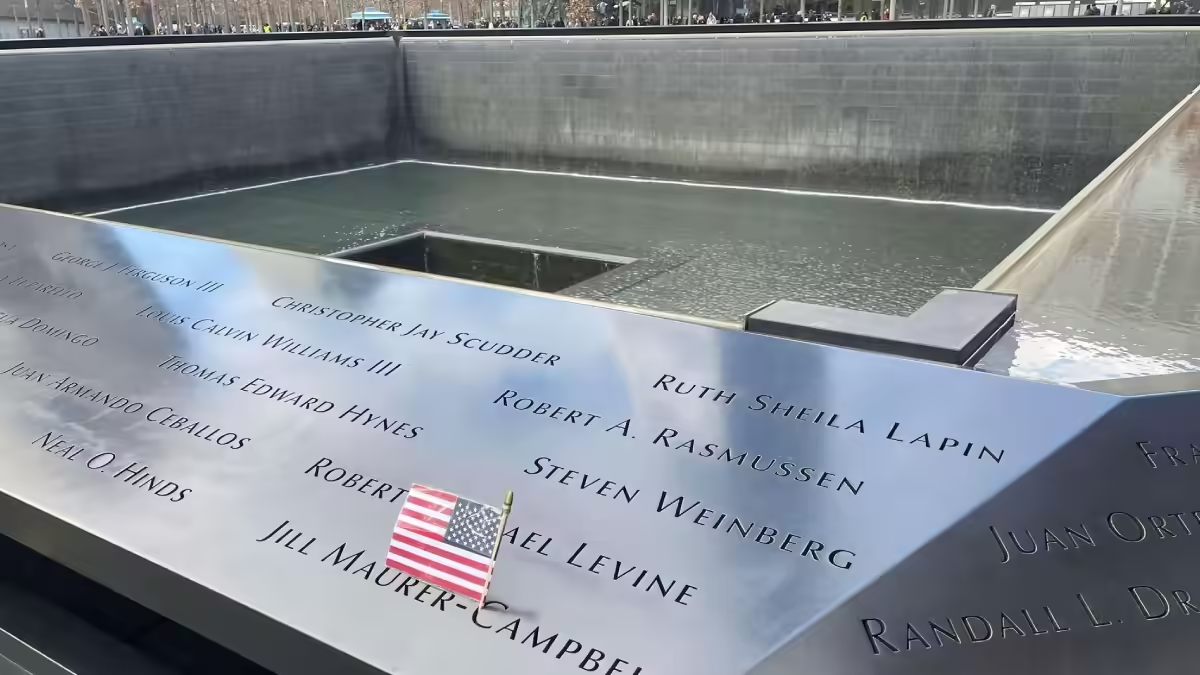
The names of the nearly 2,983 people killed in the attacks of September 11, 2001, and the February 1993 World Trade Center bombing are inscribed in bronze parapets around the Memorial’s two reflecting pools. They are not listed alphabetically. Instead they follow a design principle called “meaningful adjacencies,” which places each person near colleagues, friends, family members, or fellow first responders they were connected to in life or in death.
The bronze parapets that frame the Memorial’s twin reflecting pools carry 2,983 names: the roughly 2,977 people killed at the World Trade Center, the Pentagon, and aboard Flight 93 near Shanksville, Pennsylvania, on September 11, 2001, along with the 6 people killed in the bombing of the World Trade Center in February 1993. Reading them is, for most visitors, the quiet center of a visit to the Memorial plaza.
This guide explains how the names are organized, why they are grouped the way they are rather than placed in alphabetical order, and how to locate a specific name if you are visiting to find someone.
Where the Names Are Inscribed
The names are cut into bronze parapets that form the edge of both reflecting pools, set within the footprints of the original Twin Towers. Names of those lost at the North Tower footprint appear around the North Pool; names of those lost at the South Tower, at the Pentagon, aboard Flight 93, and in the 1993 bombing appear around the South Pool. The names are recessed and cut through the metal, so that at night they are lit from within, and visitors often trace a name with their fingers or leave a flower or a small flag in the opening.
Why the Names Aren’t Alphabetical
Placing thousands of names in strict A-to-Z order would have been the simplest approach, but it was not the one the Memorial’s designers chose. Instead, the arrangement follows a concept developed for the Memorial called “meaningful adjacencies.” Rather than sorting by surname, the design groups people according to where they were on the day they died and the relationships and affiliations they shared in life.
In practice, this means:
- Members of the same fire company, police precinct, or workplace floor are placed together, so colleagues who died side by side are named side by side.
- Family members who asked to be listed near a spouse, sibling, or child are honored with that placement.
- People who worked for the same employer, or who were seated together on one of the four flights, appear as a group rather than scattered across the parapet in alphabetical order.
- Individual names still stand on their own, each set with its own affiliation (for example, an employer or fire company) recorded alongside it, but the surrounding names reflect a shared bond rather than a shared letter of the alphabet.
The Memorial’s staff and family members were consulted extensively while the adjacencies were built, a process that took years and drew on thousands of requests. The result is meant to reflect how people actually experienced that day and to acknowledge the human connections between those who were lost, rather than reducing nearly 3,000 individual lives to a strict sequence.
How to Find a Specific Name
Because the arrangement is not alphabetical, finding one name among thousands is not something most visitors can do by scanning the parapets. The Memorial provides several ways to locate a name in advance or on site:
- The online directory. The official site includes a searchable names directory that gives the exact pool and panel location for any individual before you arrive.
- On-site directories and staff. Printed and digital directories are available at the Memorial plaza, and Memorial staff and volunteers stationed around the pools can help you find a specific location if you are unsure how to use the directory yourself.
- The audio guide. Some guided experiences and the Museum audio tour reference specific names and can help orient visitors who are looking for someone in particular.
If you are visiting to find the name of someone you knew, it is worth using the online directory before your trip so you can go directly to the right panel rather than searching in person, which can be a difficult way to spend the limited time you have at the plaza.
The White Rose Tradition
On what would have been a victim’s birthday, Memorial staff place a single white rose in the engraved opening of that person’s name. It is a quiet, private gesture rather than a public event, and visitors who notice a rose at a name are witnessing this practice in progress. Some family members also leave flowers, flags, or other small remembrances at a name themselves, particularly around anniversaries. If you see flowers or a rose at a name during your visit, it is a moment to observe with the same quiet respect you would show at any place of mourning; our guide to visiting the Memorial with care covers this and other points of etiquette in more detail.
Visiting the Names Respectfully
The names are inscribed at a place of mourning, not a monument to be photographed casually. Many visitors pause at a name they recognize, or simply read a section of the parapet in silence. If you plan to take photographs at the pools, our guide on photography at the Memorial explains what is appropriate near the names. The outdoor Memorial, including the pools and names, is free and open daily; the adjacent Museum is a separate, ticketed space that documents the attacks in greater depth.
Frequently Asked Questions
How many names are on the 9/11 Memorial?
Nearly 2,983 names are inscribed in bronze around the two reflecting pools: approximately 2,977 people killed in the attacks of September 11, 2001, at the World Trade Center, the Pentagon, and aboard Flight 93, along with the 6 people killed in the February 1993 World Trade Center bombing.
Are the names in alphabetical order?
No. The names are arranged according to a design principle called “meaningful adjacencies,” which groups people by where they were on the day they died and by the personal, professional, or organizational connections they shared, rather than by surname.
What does “meaningful adjacencies” mean?
It refers to the Memorial’s approach of placing names near others with a real connection to that person: colleagues from the same company or floor, members of the same fire company or police precinct, or family members who requested to be listed together. The intent is to reflect relationships rather than alphabetical convenience.
How do I find a specific name at the Memorial?
The official site provides an online names directory that gives the exact pool and panel for any individual, which you can consult before your visit. On site, printed and digital directories are available, and Memorial staff can help you locate a name if needed.
Why is there sometimes a white rose at a name?
Memorial staff place a single white rose in a victim’s engraved name on what would have been that person’s birthday. It is a quiet, ongoing practice rather than a scheduled public event, so visitors may encounter it on any given day.
Are the 1993 bombing victims included with the 2001 names?
Yes. The 6 people killed in the February 1993 World Trade Center bombing are inscribed alongside those killed on September 11, 2001, near the South Pool, and are honored as part of the same memorial.
Can I touch or photograph the names?
Visitors commonly trace a name with a hand, and photographs are permitted at the plaza, but this is a place of mourning for many families, so it is appropriate to be quiet and unobtrusive, particularly near visitors who appear to be grieving.
Do I need a ticket to see the names?
No. The names are part of the outdoor Memorial plaza, which is free and open daily without a ticket. Only the underground Museum, a separate space that documents the attacks, requires a timed-entry ticket.
