

The Memorial Glade: Who It Honors and Why It Matters
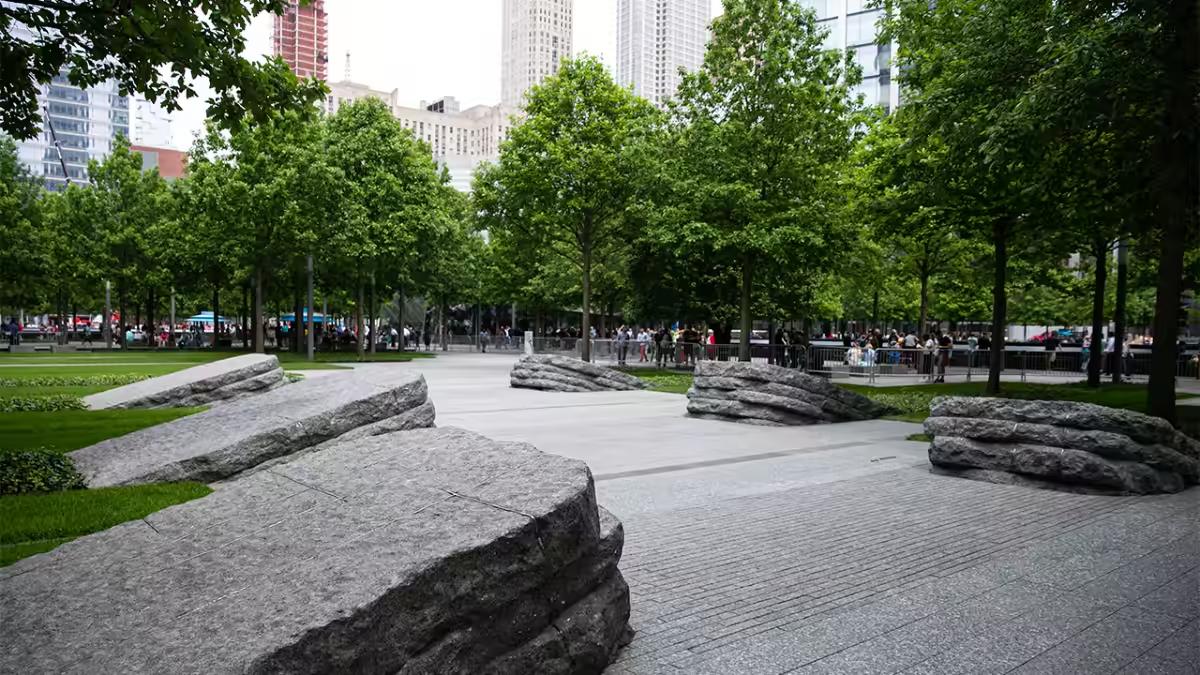
The Memorial Glade is a pathway on the 9/11 Memorial plaza, dedicated in 2019, that honors the rescue, recovery, and relief workers, and the survivors and residents of Lower Manhattan, who died or became sick from exposure to toxins in the aftermath of the attacks — as well as those who continue to suffer from related illnesses today. Six large stone monoliths, inlaid with steel salvaged from the World Trade Center, flank the path. Each monolith tilts slightly upward, a deliberate gesture meant to convey strength and determination in the face of adversity.
The Memorial Glade is one of the more recent additions to the 9/11 Memorial plaza, and it addresses a part of September 11’s toll that unfolded gradually, over years, rather than on the day itself. It is a quiet, contemplative space, easy to walk past without realizing its significance unless you know what it commemorates.
This guide explains who the Memorial Glade honors, what its design represents, why it was created in 2019, and where to find it on the plaza.
Who the Memorial Glade Honors
The Memorial Glade honors people whose deaths or illnesses were caused not by the attacks themselves but by exposure to toxins in their aftermath — the rescue, recovery, and relief workers who searched the ruins and worked at the site in the months that followed, and the survivors and residents of Lower Manhattan who breathed the air in the surrounding neighborhood. It also honors those still living with 9/11-related illnesses today.
The events of September 11, 2001 caused harm that did not end that day. In the months after the attacks, thousands of responders — firefighters, police officers, construction and utility workers, and volunteers — searched the wreckage at Ground Zero, often for months at a time and often without adequate protective equipment. Alongside them were residents, office workers, and students who lived, worked, or attended school in Lower Manhattan and were exposed to the dust and smoke that settled over the area. In the years since, many of these people have developed respiratory illnesses and cancers linked to that exposure, and a number have died as a result. The Memorial Glade was created to hold a place for them within the Memorial, alongside the names of those killed on the day itself.
The Design and Its Meaning
The Memorial Glade is a pathway flanked by six large stone monoliths, each inlaid with a line of steel salvaged from the World Trade Center. The monoliths are set at a gentle upward angle rather than standing perfectly straight, a design choice meant to suggest strength and determination in the face of hardship rather than simple loss.
Walking through the Memorial Glade, visitors pass between six weathered stone blocks arranged in pairs along the path. Each monolith carries a visible seam of steel recovered from the original World Trade Center structure, tying the space physically to the buildings that stood on the site. The stones are not perfectly upright — each leans slightly, a quiet visual choice by the designers to represent resilience rather than collapse, echoing the endurance of those who worked at the site and those who have lived with the consequences since. There is no long inscription to read here; the design itself carries the meaning, and many visitors find it a place better suited to standing quietly than to studying a text panel.
When and Why It Was Created
The Memorial Glade was dedicated in May 2019, nearly eight years after the Memorial itself opened. It was created because the toll of September 11 kept growing well beyond 2001, as responders and Lower Manhattan residents developed serious illnesses tied to exposure at the site, and advocates and family members pressed for their suffering and deaths to be formally recognized within the Memorial.
The outdoor Memorial opened on September 12, 2011, its design centered on the twin reflecting pools and the names of those killed in the attacks. By the time the Memorial Glade was dedicated in 2019, it had become clear that the human cost of September 11 was not confined to that single day. Responders who had spent weeks or months at the site were being diagnosed with cancers and lung disease at rates that made the connection to their work unmistakable, and some had already died from these conditions years after surviving the attacks themselves. The Memorial Glade was conceived as a direct response to that reality — a space acknowledging that the list of those lost to September 11 continues to grow, and that people are still becoming sick today. It stands as a recognition that this part of the story is ongoing, not historical.
Where to Find It on the Plaza
The Memorial Glade is located on the plaza along a walkway between the two reflecting pools, in an area once used as a route for vehicles and equipment during the nine-month recovery effort at the site. It is included in a visit to the outdoor Memorial and requires no separate ticket.
The Memorial Glade sits within the free outdoor plaza, on a path that many visitors cross while moving between the North Pool and the South Pool. Because it is part of the outdoor Memorial rather than the underground Museum, there is no ticket or timed entry required to see it — it is open during the plaza’s regular hours, the same as the reflecting pools and the Survivor Tree. It is easy to miss if you are moving quickly between the pools, so it is worth pausing deliberately as you cross this part of the plaza. A visit here pairs naturally with reading the names inscribed around the pools, since both commemorate lives lost to the same event, even if the causes and timing differ. Confirm the plaza’s current hours before you go on our opening hours guide.
Frequently Asked Questions
What does the Memorial Glade honor?
The Memorial Glade honors people who died or became sick from exposure to toxins in the aftermath of the September 11 attacks. This includes rescue, recovery, and relief workers who searched and worked at the site, as well as survivors and residents of Lower Manhattan exposed to the dust and smoke afterward. It also acknowledges those who continue to live with related illnesses today.
Why was the Memorial Glade created in 2019?
It was created because the human toll of September 11 kept increasing for years after the attacks, as responders and residents developed serious illnesses linked to their exposure at and around the site. The Memorial Glade was dedicated to formally recognize that ongoing loss within the Memorial, alongside the names of those killed on the day itself.
What do the six monoliths represent?
The six stone monoliths, each inlaid with steel salvaged from the World Trade Center, are set at a gentle upward angle rather than standing straight. This design is meant to represent strength and determination in the face of adversity, rather than simply marking loss.
Where is the Memorial Glade located on the plaza?
It is located along a walkway between the two reflecting pools, on ground once used as a route for vehicles and equipment during the recovery effort at the site. It is part of the outdoor Memorial plaza, not the Museum.
Is there a fee to visit the Memorial Glade?
No. The Memorial Glade is part of the free outdoor Memorial plaza, which is open daily with no ticket required. Only the underground Museum requires a paid, timed-entry ticket.
Are there names inscribed at the Memorial Glade?
No. Unlike the bronze parapets around the reflecting pools, the Memorial Glade does not list individual names. Its meaning is carried through the stone monoliths and the steel inlaid within them, rather than through an inscription.
What is the steel in the monoliths from?
The steel inlaid in each monolith was salvaged from the original World Trade Center structure, physically connecting the Memorial Glade to the buildings that stood on the site before the attacks.
How long does it take to see the Memorial Glade?
Most visitors spend a few quiet minutes at the Memorial Glade as part of a longer walk through the outdoor plaza. It is a brief stop, but one worth pausing for rather than passing through quickly.
