

Foundation Hall & the Last Column at the 9/11 Museum
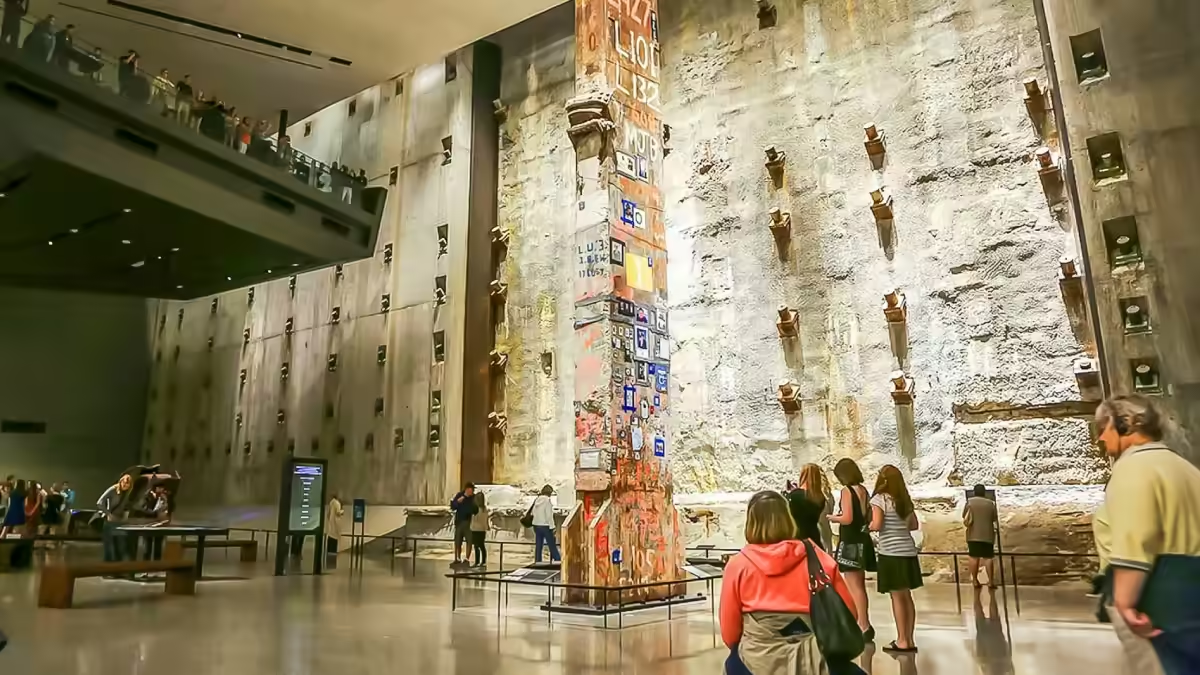
Foundation Hall is a large space at bedrock level inside the 9/11 Museum, built around a preserved section of the original slurry wall that held back the Hudson River during and after the attacks. Standing within it is the Last Column, a 36-foot steel beam that was the final piece of structural steel removed from Ground Zero in May 2002, covered in inscriptions, photographs, and mementos left by recovery workers and victims’ families. Both are part of the ticketed Museum, not the free outdoor Memorial.
Deep beneath the Memorial plaza, at the level of the original World Trade Center foundations, Foundation Hall is one of the most affecting spaces in the Museum. It brings visitors face to face with the physical remains of the site and with an object that recovery workers themselves chose to preserve.
This guide explains what the slurry wall and the Last Column are, why each became a symbol of the recovery effort, and how to plan a visit that includes them.
The Slurry Wall
The slurry wall is a section of the original retaining wall built in the 1960s to hold back the Hudson River while the World Trade Center’s foundations were constructed. It withstood the collapse of the Twin Towers and kept the surrounding area from flooding, and a large exposed section of it now forms one side of Foundation Hall.
The wall is often called the “bathtub,” a reference to the basin it forms around the original World Trade Center site. Engineers built it to keep groundwater from the nearby Hudson River out of the below-grade foundations, and its survival on September 11, 2001, is considered one of the reasons the damage did not extend further into Lower Manhattan. In Foundation Hall, roughly 60 feet of the wall remains exposed and visible, still anchored by the tiebacks that hold it in place. Seen up close, it is a plain, functional piece of engineering rather than a designed memorial element, which is part of what makes its endurance notable.
The Last Column
The Last Column is a 36-foot steel column that was the final piece of structural steel removed from Ground Zero, in a ceremony on May 30, 2002, marking the formal end of the recovery effort. Over the preceding months, recovery workers, firefighters, police officers, and family members had covered it with handwritten memorials, unit insignias, photographs, and other mementos, and it now stands in Foundation Hall largely as it looked on that day.
During the nine months of recovery work, the column stood near the ramp used to remove debris from the site, and it became an informal gathering point. People wrote the names of colleagues and loved ones on it, attached photographs and patches, and left other tributes as the work continued. When it was finally cut down and carried out, it was treated less as scrap steel than as an artifact, and it was conserved rather than melted down with the rest of the wreckage. Today it stands upright in Foundation Hall, its markings preserved under a protective coating, positioned so visitors can walk its full length and read what was written on it.
Why These Two Objects Matter
Foundation Hall pairs an engineering survival with a human one. The slurry wall represents physical endurance: a structure built for an unrelated purpose that happened to protect the site from further catastrophe. The Last Column represents the recovery workers’ own record of loss and solidarity, created in the months after the attacks rather than designed afterward as a memorial piece. Museum curators chose to preserve both largely as found, with minimal alteration, so that visitors encounter them much as recovery workers and early visitors did. Together they anchor the Museum’s historical exhibition in physical evidence rather than description alone.
Visiting Foundation Hall
Foundation Hall sits within the Museum’s main exhibition space, at bedrock level, and is included with standard Museum admission. There is no separate ticket or additional fee to see it. Because the Museum documents the events of September 11, 2001, and their aftermath in detail, this section — like much of the historical exhibition — can be emotionally demanding, and many visitors choose to spend extra time here. A standard Museum entry ticket covers Foundation Hall along with the rest of the exhibition; our guide to how long to spend at the 9/11 Memorial & Museum can help you plan enough time for it. It is worth remembering that Foundation Hall is part of the Museum rather than the outdoor Memorial plaza; our guide to the Memorial versus the Museum explains the distinction if you are deciding what to include in your visit.
Frequently Asked Questions
What is Foundation Hall at the 9/11 Museum?
Foundation Hall is a large space at bedrock level inside the Museum, built around a preserved section of the original slurry wall from the World Trade Center’s foundations. It also contains the Last Column, the final piece of structural steel removed from Ground Zero. It is part of the historical exhibition and included with standard Museum admission.
What is the slurry wall and why is it significant?
The slurry wall is a retaining wall built in the 1960s to keep Hudson River groundwater out of the World Trade Center’s foundations. It survived the collapse of the towers and helped prevent flooding of the surrounding area and nearby subway lines. A large section remains exposed in Foundation Hall as a physical reminder of the site’s resilience.
What is the Last Column?
The Last Column is a 36-foot steel beam that was the final piece of structural steel removed from Ground Zero, in a ceremony on May 30, 2002. Recovery workers and family members covered it with inscriptions, photographs, and mementos over the preceding months, and it was preserved rather than discarded. It now stands upright in Foundation Hall, largely as it looked when it was removed.
Do I need a separate ticket to see Foundation Hall?
No. Foundation Hall and the Last Column are part of the Museum’s main exhibition and are included with any standard Museum ticket. There is no additional charge to view them, though you do need a timed-entry Museum ticket, since the outdoor Memorial plaza is a separate, free area that does not include Foundation Hall.
Is Foundation Hall part of the Memorial or the Museum?
Foundation Hall is part of the underground Museum, not the free outdoor Memorial plaza. The Memorial plaza above ground includes the reflecting pools, the inscribed names, the Survivor Tree, and the Memorial Glade, while Foundation Hall, the Last Column, and the historical exhibition sit below, inside the ticketed Museum.
Why was the Last Column preserved instead of removed with the rest of the debris?
Recovery workers had used the column as a place to write the names of the missing, leave tributes, and mark milestones during the nine-month recovery effort, so by the time it was the last piece of steel standing, it had already become a memorial in its own right. Officials chose to conserve it rather than dispose of it with other structural debris, and it was later moved into the Museum for permanent display.
How much time should I set aside for Foundation Hall?
Most visitors spend between fifteen and thirty minutes in Foundation Hall itself, though it sits within a larger historical exhibition that can take much longer to see in full. Because the space and the objects in it can be emotionally demanding, it is worth building unhurried time into your visit rather than rushing through.
Are photographs allowed in Foundation Hall?
Personal photography without flash is generally permitted throughout the Museum, including in Foundation Hall, though visitors are asked to remain quiet and respectful, as they are in all areas documenting the events of that day. Tripods and commercial equipment are not permitted without prior authorization from the Museum.
