

Inside the 9/11 Museum: Exhibits, Artifacts & Layout
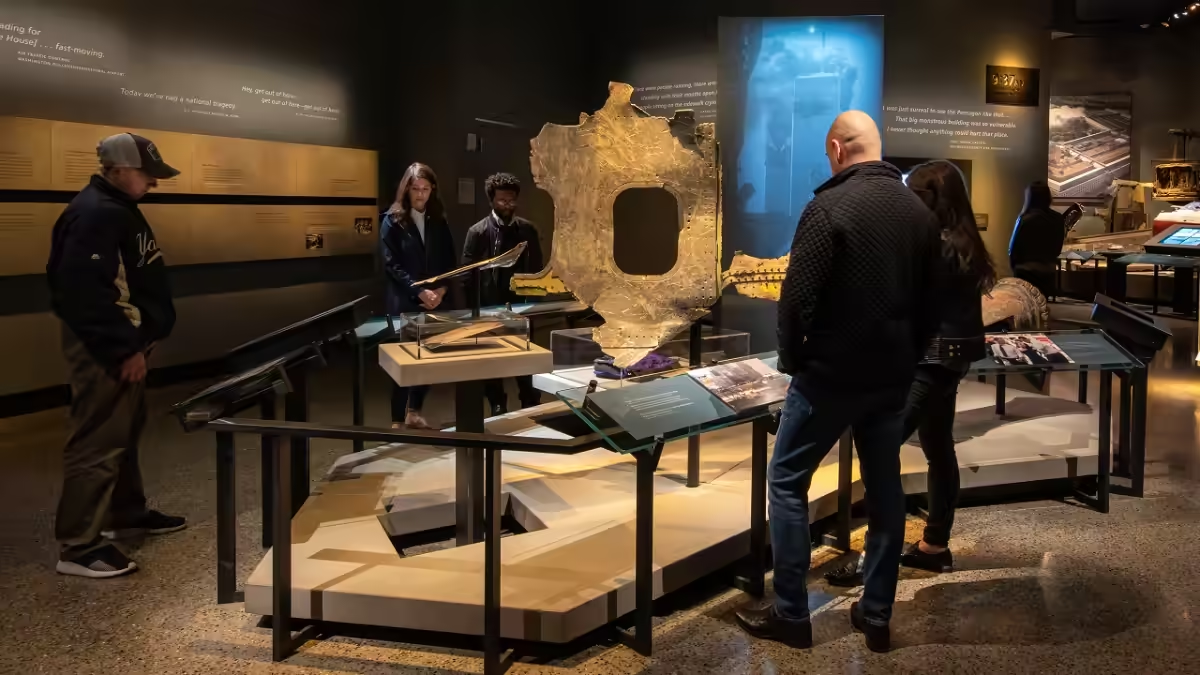
The 9/11 Museum sits below ground at the bedrock level of the original World Trade Center site, reached by a long descending ramp past the slurry wall. Its core spaces are Foundation Hall, with the Last Column, and two main exhibitions: a historical exhibition documenting the events of September 11, 2001, and the 1993 bombing, and a memorial exhibition, In Memoriam, remembering the nearly 2,983 people killed. Artifacts on display include fire trucks, recovered steel, and personal effects. Some areas are graphic and emotionally demanding, so it helps to know the layout before you go.
The Museum occupies the space below the Memorial plaza, built around structural remnants of the original World Trade Center. Unlike the outdoor Memorial, which is free and open to all, the Museum is ticketed and its exhibitions require a visit of real length and attention. This guide walks through the layout, from the entrance ramp to the two main exhibitions, so you know roughly what to expect and where the most difficult content is located.
The Descent to Bedrock
Visitors enter the Museum at plaza level and follow a long ramp downward, past exposed sections of the original slurry wall, to the bedrock on which the Twin Towers once stood. The descent is a deliberate design choice: it takes you physically down to the level where the attacks and the recovery took place, and it sets a slower, more deliberate pace before the exhibitions begin. Along the way, changes in light and sound mark the transition from the open plaza above to the enclosed galleries below.
Foundation Hall: The Last Column and the Slurry Wall
Foundation Hall is the Museum’s largest and most architecturally striking space, defined by two surviving structural elements: the slurry wall, the retaining wall that held back the Hudson River during and after the attacks, and the Last Column, the final piece of steel removed from the site at the end of the recovery effort.
Foundation Hall sits at bedrock level, framed by the slurry wall on one side. The wall held firm through the towers’ collapse and the recovery period that followed, and it remains largely as it was, a visible reminder of what the site withstood. Facing it is the Last Column, a 36-foot steel beam covered in memorial inscriptions, mission patches, and photographs left by ironworkers, first responders, and recovery workers before it was ceremonially removed in 2002. It now stands as one of the Museum’s most direct physical links to the recovery.
The Survivors’ Stairs
Near Foundation Hall stands a remnant of the Survivors’ Stairs, the outdoor staircase that led from the World Trade Center plaza to Vesey Street. Hundreds of people used these steps to escape the towers on the morning of the attacks, before the collapse. The stairs were recovered largely intact and installed in the Museum close to where they originally stood, and they’re often one of the first artifacts visitors encounter after Foundation Hall.
The Historical Exhibition
The historical exhibition is the Museum’s largest and most detailed component. It documents the morning of September 11, 2001, largely hour by hour, using video, audio recordings, photographs, and recovered objects to trace the attacks as they unfolded at the World Trade Center, the Pentagon, and near Shanksville, Pennsylvania. An earlier section covers the 1993 bombing of the World Trade Center, and later galleries follow the aftermath: the rescue and recovery effort, the global response, and the years that followed. The pacing is dense and the content unflinching, which is why our guide to how long to spend at the Museum suggests building in more time than a typical museum visit.
The Memorial Exhibition: In Memoriam
Adjacent to the historical exhibition is In Memoriam, a quieter, more contemplative space dedicated to the nearly 2,983 people killed in the 1993 and 2001 attacks. Each victim is represented by a photograph and a short biographical profile, and a Wall of Faces displays their portraits together. An inner Reflection Room allows visitors to hear victims’ names read aloud alongside recorded memories shared by family and friends. Where the historical exhibition documents the attacks, In Memoriam is centered on the individual lives lost, and many visitors experience it as the most personal part of the Museum.
Artifacts on Display
Beyond the Last Column and the Survivors’ Stairs, the Museum holds a wide range of recovered material. Large-scale artifacts include a crushed FDNY fire truck and other emergency vehicles damaged in the collapse, along with twisted structural steel recovered from the towers. Smaller displays hold personal effects — wallets, shoes, and other everyday items recovered from the site — alongside photographs, voicemail recordings, and objects donated by victims’ families and survivors. Many of these items are displayed with minimal interpretation, letting the objects themselves convey the scale of what happened.
What to Expect Emotionally
The Museum is not a light visit. The historical exhibition includes graphic photographs, video, and audio, including recordings made by people inside the towers, and some sections are recommended for visitors aged 10 and older. Staff mark the more graphic areas, and alternate routes exist around some of the most intense content for visitors who prefer to skip it. Our guide to rules and etiquette goes into more detail on what to expect and how to prepare.
Frequently Asked Questions
What exhibits are inside the 9/11 Museum?
The Museum’s two main exhibitions are the historical exhibition, which documents September 11, 2001, and the 1993 bombing hour by hour, and the memorial exhibition, In Memoriam, which remembers the nearly 2,983 victims through photographs and profiles. Foundation Hall, the Last Column, the slurry wall, and the Survivors’ Stairs are the major structural and artifact displays outside the two exhibitions.
What is the Last Column?
The Last Column is a 36-foot steel beam that was the final piece of structural steel removed from the World Trade Center site at the close of the recovery effort in 2002. It’s covered in inscriptions, photographs, and mission patches left by recovery workers, and it now stands in Foundation Hall as one of the Museum’s central artifacts.
What is the slurry wall?
The slurry wall is the original retaining wall built to hold back the Hudson River from the World Trade Center’s foundations. It withstood the towers’ collapse and remained standing through the recovery period, and a large section of it is exposed in Foundation Hall as one of the few structural elements still in its original location.
What are the Survivors’ Stairs?
The Survivors’ Stairs are a remnant of the outdoor staircase that once led from the World Trade Center plaza to Vesey Street. Several hundred people used the stairs to escape the site on the morning of the attacks, and the recovered steps are now displayed in the Museum near Foundation Hall.
What is the In Memoriam exhibition?
In Memoriam is the Museum’s memorial exhibition, dedicated to the nearly 2,983 people killed in the 1993 and 2001 attacks. It displays a photograph and short profile for each victim, along with a Reflection Room where visitors can hear victims’ names and recorded memories shared by their families.
Are there graphic images in the Museum?
Yes. The historical exhibition includes graphic photographs, video, and audio related to the attacks, and parts of it are recommended for visitors aged 10 and older. The Museum marks these areas, and alternate paths exist around some of the most intense content.
How far underground is the Museum?
The Museum is built at bedrock, roughly 70 feet below the Memorial plaza, on the original foundation level of the World Trade Center. Visitors reach it by a long descending ramp that passes the slurry wall on the way down.
Is the Museum appropriate for children?
The Museum can be difficult for younger children given the graphic content in parts of the historical exhibition. Families with children should read our guide to visiting with children before booking, as it covers age recommendations and which areas to plan around.
